
Category: Cars

  • The Science Behind Diesel Horsepower: Understanding Air and Fuel Delivery

    The Science Behind Diesel Horsepower: Understanding Air and Fuel Delivery

    The Science Behind Diesel Horsepower: Understanding Air and Fuel Delivery

    Diesel horsepower comes down to science. It’s heat energy changed into motion, but that change only happens effectively when oxygen and fuel are in the perfect ratio at the perfect time. If you don’t get that balance right, you’re not using all the power available to you, or you’re destroying your engine in the process. Knowing the science behind that equation is what distinguishes a quality performance diesel from a costly mistake.

    The Oxygen Side of the Equation

    Diesel engines operate differently than gasoline engines, they don’t use a stoichiometric ratio, and they naturally have excess oxygen in the exhaust. This air is deliberately present to facilitate complete fuel combustion and keep exhaust gas temperatures (EGT) at an acceptable level. When you try to burn more fuel than oxygen allows, you get black smoke out of the tailpipe because the excess fuel is passing right through the cylinder unburned.

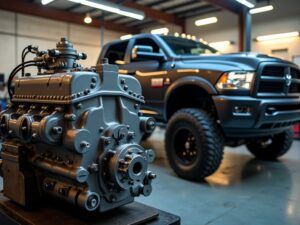
    That’s where the turbocharger comes in. While the stock 6.7L Cummins variable geometry turbocharger (VGT) does an acceptable job of pumping air into the combustion chamber over a broad RPM band, compressed air is hot and subsequently less dense. The intercooler’s job is to cool that compressed air before it enters the cylinder head, effectively upping the oxygen volume per cubic foot. Boyle’s Law tells us that, at a constant pressure, the volume of a gas is proportional to its absolute temperature. If the air is cooler at a constant pressure, there are more oxygen molecules in the cylinder. More oxygen means more fuel can burn, and more fuel burn means more engine power.

    Boost pressure and drive pressure have a relationship just as important as the interaction of compression and charge air-flow. If the exhaust side can’t flow enough supporting air volume for the flow produced on the intake side (When drive pressure exceeds boost pressure), you hit a wall in your air-flow. Turbo stalling. Exhaust temperatures climbing. More boost isn’t the fix here, more airflow is.

    How the 6.7L Cummins Delivers Fuel

    The 6.7L Cummins has a common rail injection system. Fuel is held at high pressure in a common rail and sent to each injector in precise, controlled pulses. This design can facilitate multiple injection events per combustion stroke. A small pilot injection precedes the main event to decrease noise and increase combustion efficiency. A post-injection can be used to help control EGTs under load.

    The pressure at which that fuel is delivered is important. More pressure creates better atomization, breaking the fuel into smaller particles that burn more easily. When a tuner talks about "pulse width" (how long the injector stays open), they are talking about adjusting how much fuel enters the cylinder. But there is a limit to how long you can hold the injector open. A longer spray at lower pressure leads to larger fuel droplets that do not burn as easily, meaning more soot, higher EGTs, and less power per amount of fuel used. This is why it is more effective to use pressure to control how much fuel makes it into the cylinder. Raise the rail pressure and more fuel can be delivered through the same orifice in the same or less amount of time.

    The Fuel System Bottleneck

    This is where most high-output 6.7L builds get stuck. The factory Bosch high-pressure pump is fine for stock and moderately altered applications, but it’s not built to provide high-demand fueling sustainably. When tuning calls for more fuel than 500-550 rear-wheel horsepower, the factory pump isn’t powerful enough to maintain rail pressure. The rail pressure sensor reads the drop. The injectors can’t flow what the ECU is demanding. Power falls off, and the engine goes pig rich at WOT.

    An upgraded cp3 pump simply makes sure that the common rail is always pressurized, no matter how hard the tune is requesting fuel. It’s equally important that the lift pump feeding the high-pressure system can keep the supply side from starving the pump under load. Both sides of the fuel path need to play ball.

    What Tuning Actually Does

    ECU remapping, what most people call "tuning", rewrites the fuel and air delivery maps that govern how the engine responds to driver input. Injection timing, rail pressure targets, boost targets, and fueling curves all live in that software. A good tune coordinates all of these variables to work together.

    But software can only command what the hardware can deliver. A tune that calls for rail pressure the factory pump can’t sustain is just asking the engine to run lean or fail silently under load. The tuner provides the instructions. The hardware provides the capability.

    This is why the smartest builds tackle both simultaneously. Getting the fuel system hardware sorted before pushing the tune hard means the ECU’s commands are actually being executed as written, across every RPM and load condition where it matters.

    Performance diesel ownership rewards people who understand what the engine is actually doing. When you know why oxygen, fuel pressure, and timing interact the way they do, the parts list writes itself.

  • Why Regular Car Maintenance Pays Off Long-Term: Maximising Vehicle Longevity and Savings

    Why Regular Car Maintenance Pays Off Long-Term: Maximising Vehicle Longevity and Savings

    Regular car maintenance might seem like an inconvenient expense, but it actually saves money over time by preventing costly repairs. Many drivers delay services until a problem arises, which often leads to more extensive damage and higher bills.

    Consistent check-ups and timely replacements keep the vehicle running efficiently, extending its lifespan and reducing the likelihood of breakdowns. This proactive approach also helps maintain safety and reliability on the road.

    Understanding why maintenance matters encourages smarter decisions about vehicle care. By investing small amounts regularly, owners protect their car’s performance and avoid unexpected disruptions.

    How Regular Car Maintenance Prevents Costly Repairs

    Regular maintenance helps identify small issues early, reducing the risk of expensive fixes later. Proactive care protects vital components like the engine and improves overall vehicle reliability.

    Consequences of Skipping Routine Car Care

    Neglecting routine car care often leads to accelerated wear and tear. For example, failing to change oil regularly causes sludge buildup, which reduces lubrication and increases friction.

    This eventually results in parts wearing out prematurely. Brake pads can deteriorate faster, and tyres may wear unevenly, increasing the chance of accidents or costly replacements.

    Skipping maintenance also voids warranties in some cases. Repair bills tend to escalate as minor issues become major problems that need extensive work.

    Avoiding Engine Damage Through Preventive Actions

    The engine requires consistent care to function effectively. Regular oil changes, coolant flushes, and air filter replacements keep internal components clean and cool.

    Ignoring these steps risks overheating and internal engine damage, which is expensive to repair. Timing belt inspections, for instance, can prevent catastrophic engine failure if replaced on schedule.

    Preventive maintenance ensures fluids circulate properly and debris is filtered out, preserving engine life. It reduces the chance of breakdowns caused by mechanical failure.

    Preventing Unexpected Breakdowns

    Unexpected breakdowns often result from neglected components like batteries, belts, and hoses. Regular checks can spot cracks, leaks, or worn parts before they fail.

    Replacing these parts as part of routine car care prevents roadside failures that require costly towing or emergency repairs. Scheduled inspections help maintain dependable vehicle operation.

    Maintaining tyre pressure and battery health also lowers the risk of inconvenient and expensive breakdowns, ensuring safer and more predictable journeys.

    Essential Maintenance Tasks for Long-Term Savings

    Routine upkeep targets specific car components that prevent costly repairs. Paying close attention to lubrication, tyre condition, brakes, and fluid levels reduces wear and maintains optimal performance.

    Importance of Oil and Filter Changes

    Oil lubricates the engine’s internal parts, preventing friction and heat buildup. Over time, oil degrades and collects contaminants, reducing its effectiveness. Regular oil and filter changes maintain engine health and improve fuel efficiency.

    Most vehicle manufacturers recommend changing oil every 5,000 to 10,000 miles, but this varies by oil type and driving conditions. Neglecting oil changes can lead to engine sludge and accelerated wear, potentially resulting in costly repairs or engine failure.

    Using the correct oil grade and a high-quality filter is essential. It ensures proper flow and removes dirt before it causes damage.

    Tire Rotations and Wheel Alignment

    Tyres wear unevenly due to driving patterns and road conditions. Regular tyre rotations even out tread wear, extending tyre life. Experts suggest rotating tyres every 8,000 to 10,000 miles.

    Wheel alignment ensures the wheels point in the correct direction for optimal handling and tyre wear. Misalignment causes rapid and uneven tyre degradation, affecting safety and fuel economy.

    Proper tyre care involves checking tread depth, inflation pressure, and inspecting for damage. Maintaining correct pressure improves grip and reduces the risk of blowouts.

    Brake System Inspections and Safety

    Brakes are critical for safety and require routine checks. Brake inspections identify wear on pads, discs, and fluid condition. Worn brake pads reduce stopping power and increase the risk of accidents.

    Brake fluid absorbs moisture over time, which lowers its boiling point and compromises braking efficiency. Regular fluid flushes, typically every 2 years, maintain system reliability.

    Ignoring brake maintenance can lead to increased repair costs or failure. Early detection during inspections helps avoid expensive component replacements.

    Fluid Checks and Top-Ups

    Vehicles rely on several fluids: coolant, transmission fluid, power steering fluid, and brake fluid. Each fluid has a specific role in performance and longevity.

    Coolant prevents engine overheating by regulating temperature. Transmission fluid lubricates gears, ensuring smooth shifts and protecting components. Power steering fluid enhances steering response and ease.

    Regular checks catch leaks or contamination early. Top-ups maintain correct levels and prevent mechanical issues. Following manufacturer intervals for fluid replacement avoids breakdowns and costly repairs.

    Maximising Vehicle Lifespan and Performance

    Regular car maintenance directly influences a vehicle’s efficiency, durability, and safety. A carefully followed maintenance schedule helps preserve critical components, optimise fuel use, and reduce the risk of breakdowns.

    Enhanced Fuel Efficiency

    Keeping the engine in good condition is key to maintaining fuel efficiency. Regularly changing air filters ensures the engine breathes properly, which improves combustion and reduces fuel consumption. Worn spark plugs and clogged fuel injectors can cause incomplete combustion, leading to poor mileage and higher emissions.

    Tyre pressure also affects fuel economy; under-inflation increases rolling resistance. Checking and correcting tyre pressure monthly is a simple yet effective maintenance step. Routine oil changes reduce engine friction, making it run smoother and consume less fuel. Sticking to the manufacturer’s maintenance schedule ensures these components work optimally, helping to keep fuel costs down.

    Reducing Wear and Tear

    Consistent maintenance prevents premature wear on engine parts and mechanical systems. Changing engine oil, brake fluid, and transmission fluid at recommended intervals lubricates moving parts and prevents corrosion. This reduces strain on components and extends their service life.

    Suspension checks identify worn shock absorbers or bushings that can cause uneven wear on tyres and other parts. Timely replacement of brake pads not only maintains braking performance but also prevents damage to brake discs. Recording maintenance history helps detect patterns and avoid costly repairs by addressing minor issues early.

    Improving Driving Safety

    Maintaining key safety features through regular inspections ensures reliable vehicle control. Functional brakes, well-maintained tyres, and effective suspension are vital for safe braking and handling. Ignoring maintenance on these can lead to compromised grip, longer stopping distances, or failure under stress.

    Electrical systems, including lights and indicators, also require routine checks. Faulty lighting diminishes visibility, posing risks during night or adverse weather conditions. Maintaining the steering system and wheel alignment supports stable and predictable vehicle response, reducing accident risk.

    Proper car maintenance directly supports safe driving by ensuring all critical systems perform reliably under varied conditions.

    Maintaining Car Value and Building Trust

    Regular maintenance helps preserve a vehicle’s worth and assures its reliability to future owners. Keeping detailed records and sticking to scheduled services builds confidence in the condition of the car. Selecting reputable repair professionals further supports the vehicle’s long-term value and performance.

    Keeping an Accurate Maintenance Record

    A complete maintenance record documents every service and repair, proving the car has been properly cared for. It should include dates, mileage, parts replaced, and service details. This information is essential when selling or trading the vehicle, demonstrating adherence to the maintenance schedule.

    Digital logs or physical folders both work, but consistency matters more than format. Records also assist mechanics by providing a service history, which can prevent unnecessary work. Buyers are more likely to trust a vehicle with transparent and thorough maintenance documentation.

    Boosting Resale Value with Consistent Upkeep

    Consistently following the manufacturer’s recommended maintenance schedule preserves a car’s performance and appearance. Regular oil changes, brake checks, and fluid replacements help avoid costly breakdowns and wear.

    A well-maintained vehicle typically sells for a higher price compared to one with gaps in servicing. Routine upkeep projects an image of care, giving buyers confidence that they are investing in a dependable product. Maintaining tyres, filters, and engine components is key, as these directly affect drivability and safety.

    Choosing Trusted Auto Repair Professionals

    Selecting a trusted auto repair service affects both maintenance quality and trustworthiness. Certified garages and technicians familiar with the vehicle’s make ensure proper repairs and genuine parts.

    Trustworthy mechanics provide clear estimates, communicate necessary services, and avoid unnecessary work. Positive reviews and recommendations from other vehicle owners indicate reliability. A consistent relationship with a reliable repair professional helps maintain the vehicle according to the correct maintenance schedule, sustaining its value and safety.


  • Building a Professional Racing Wardrobe

    Building a Professional Racing Wardrobe

    Building a Professional Racing Wardrobe

    Track days mean one thing but when it comes to racing for real, the required gear changes entirely. That entry level suit and helmet is all well and good for a club based event, but as soon as you start climbing the ranks, it’s no longer good enough. The higher you get, the more proper gear you acquire that meets stringent safety measures and improves performance instead of just complying with baseline expectations. And it’s not about aesthetic appeal, either. It’s about having gear that does what it should and won’t fail you on a day when you need it most.

    For drivers who compete on the regular, their gear isn’t costume protection that they have to wear. Each piece has a function, and the difference between decent kit and junk is found in safety margins and how much attention you have to pay to discomfort when you’re trying to focus on steering.

    Making Sense of Suits

    If you’re racing properly, you’re going to end up with several suits. A suit that’s brilliant for a 20-minute sprint is completely agonizing during a three hour endurance race. Different championships certify different options, and on top of it, there’s the weather—what’s great for a winter’s day of testing, becomes horrible in the heat of July.

    Options like bespoke made racing suits let drivers get exactly what they need for their racing and their build. Proper tailoring means the suit fits without pulling or bunching when you’re reaching for controls, which gets more important as precision matters more. Standard sizes work for loads of people, but drivers who race often find that gear made to measure makes a noticeable difference.

    Having multiple suits sounds excessive until you realize the benefits. Dedicating items to specific purposes extends the life of each piece and allows for more effective operation. You need time to dry out a suit that has become thoroughly soaked during a boiling race before it can work again. Otherwise you’re just ruining the integrity of the suit. There’s no reason to wear one shirt into the ground while a couple of others sit perfectly folded in a drawer.

    Everything Else of Import

    Even what’s underneath the suit matters nearly as much as the suit itself. Decent fire-resistant underlayers, balaclavas and socks may not be aesthetically appealing but offer protection in addition to managing sweat in favor of comfort. No one sees these undergarments but they make all the difference in how you feel within the car—especially during long races or in extreme temperature conditions.

    Then it’s gloves and boots. Having several pairs is useful based on conditions and preferences. Some like thinner gloves for feel, others more protection. Boots depend partly on the pedals of the car but also if you like thin soles for feel or more support around the ankle.

    The trick is making sure everything works together nicely. There’s no point in having a perfectly fitting suit if your boots are too cumbersome or your gloves inhibit wrist motion. If a driver takes racing seriously, they’ll test their full kit as one package to assess whether or not the combination allows for natural movement while keeping safety standards where they should be.

    Caring For Your Kit

    Racing kit requires actual care for optimum function and longevity. Most racing suits can’t go in the washer—some need specialty cleaning efforts to avoid ruining treated fire-resistance materials. Helmets require regular assessments and replacement within scheduled timeframes regardless of whether or not they’ve been impacted because certifications expire.

    Storing isn’t particularly complicated but it’s critical. Kit must exist in dry areas away from sunshine (sunshine destroys fire-resistant materials). Having everything hung up between events instead of crumpled in bags helps retain shape and protective qualities.

    Establishing suppliers that you trust helps look after pieces and replace them at the right time. You can’t afford anything to fail during a critical race, so keeping track of replacements comes with the territory of proper pre-race planning.

    Making It Affordable

    While creating a proper kit costs actual money, the best way to do it is to spread it out sensibly over time. The important items to get first are protective—in other words, suit, helmet, HANS device must be obtained first before anything else because they’re mandatory through championship regulations.

    Adding everything else gradually as funds become available is the best approach. Starting with one really good suit and building from there makes more sense than starting with three mediocre options and buying another really good one later down the line. But most importantly, never compromise safety gear in order to pay for other racing expenses. This equipment is what allows everything else to work.

    Higher-quality gear retains value as well. Kits that are made well last longer, are certified for more seasons, and sell better than mediocre options down the line when it’s time to upgrade. Higher price-per-unit makes more sense in the long run through higher quality longevity and better protection while you’re wearing/using it.

    Professional racing requires a professional kit. Creating a proper wardrobe isn’t cheap and takes time, but with everything you need for every opportunity means you can focus exclusively on driving instead of wondering if your gear is good enough.

  • Why Tyre Maintenance Is More Important Than You Think: Ensuring Safety and Performance on Every Journey

    Why Tyre Maintenance Is More Important Than You Think: Ensuring Safety and Performance on Every Journey

    Tyre maintenance is often overlooked, but it plays a critical role in safety, fuel efficiency, and vehicle performance. Many drivers underestimate how quickly worn or improperly inflated tyres can affect their journey and overall costs.

    Proper tyre care helps prevent accidents by ensuring better grip and control, while also extending the life of the tyres themselves. Neglecting this simple task can lead to costly repairs and increased fuel consumption, making regular checks a practical necessity.

    Understanding why tyre maintenance is more important than commonly thought encourages responsible driving habits and can save money in the long run. This article explores the key reasons every driver should prioritise their tyres.

    Why Tyre Maintenance Is More Important Than You Think

    Maintaining tyres regularly affects several key aspects of driving, including safety, vehicle handling, and fuel consumption. Understanding these factors helps emphasise why routine checks and care are essential.

    Safety Benefits of Proper Tyre Care

    Proper tyre maintenance significantly reduces the risk of accidents. Worn or underinflated tyres increase stopping distances, especially on wet or slippery roads. This can lead to loss of control in emergency situations.

    Regularly checking tread depth, inflation pressure, and overall condition ensures tyres perform as designed. It also helps prevent blowouts caused by damage or excessive wear. Tyres with adequate grip enhance braking and cornering stability, crucial for safe driving.

    Ignoring tyre care may lead to uneven wear, which can cause vibrations and reduce vehicle stability. This is particularly dangerous at high speeds or during sudden manoeuvres. Well-maintained tyres contribute directly to the driver’s control and passenger safety.

    How Tyre Maintenance Impacts Vehicle Performance

    Tyres are the only contact between a vehicle and the road, so their condition directly affects handling and ride comfort. Properly inflated and balanced tyres ensure smooth steering response and minimise vibrations.

    Uneven or excessive wear can lead to poor alignment and handling issues, such as pulling to one side. This increases driver fatigue and can cause premature suspension wear. Keeping tyres in good condition prolongs the life of other vehicle components.

    Routine maintenance, including rotation and pressure checks, supports consistent performance. It helps maintain optimal contact with the road surface, improving traction during acceleration or braking. This benefits both city and highway driving.

    The Connection Between Tyres and Fuel Efficiency

    Tyre pressure plays a critical role in fuel consumption. Underinflated tyres increase rolling resistance, forcing the engine to work harder and use more fuel.

    Maintaining the recommended pressure improves fuel efficiency by up to 3-4%, according to studies. This is because properly inflated tyres reduce unnecessary energy loss.

    Additionally, well-maintained tyres decrease wear rates, cutting down on frequent replacements and tyre waste. Balancing fuel savings with tyre longevity provides both economic and environmental benefits. Drivers should check pressures monthly to optimise performance and reduce running costs.

    Tyre Maintenance Task Effect on Vehicle Impact on Fuel Efficiency
    Regular Pressure Check Improved handling and safety Up to 4% better mileage
    Tread Depth Monitoring Prevents accidents and improves grip Indirect (safer driving)
    Tyre Rotation Even wear, consistent performance Extended tyre life

    Essential Elements of Tyre Maintenance

    Proper tyre care involves several key practices that directly affect safety and performance. Maintaining the correct balance of tyre pressure, tread depth, and wear patterns ensures a vehicle handles predictably and reduces the risk of accidents.

    Checking and Adjusting Tyre Pressure

    Tyre pressure must be checked regularly, ideally once a month and before long journeys. Incorrect pressure, especially under-inflated tyres, can cause poor fuel economy, increased tyre wear, and compromised handling.

    The recommended tyre pressure is found in the vehicle’s handbook or on a sticker inside the driver’s door frame. Using a reliable pressure gauge ensures accuracy. Pressure should be checked when tyres are cold, as heat affects readings.

    Adjusting pressure to the manufacturer’s specified level improves grip, braking efficiency, and steering control. Over-inflated tyres, while less common, lead to reduced contact with the road and uneven wear along the centre tread.

    Monitoring Tyre Tread Depth

    Tyre tread depth influences grip, especially in wet conditions. The legal minimum tread depth in the UK is 1.6mm across the central three-quarters of the tread. However, many experts advise replacing tyres well before this point to maintain safety.

    Measuring tread depth can be done with a tread depth gauge or simple tools such as a 20p coin. Tyres with insufficient tread struggle to disperse water, raising the risk of hydroplaning.

    Consistent monitoring helps identify when tyres are approaching the point where they no longer provide adequate traction or comply with legal standards.

    Preventing Uneven Tyre Wear

    Uneven tyre wear often results from problems such as incorrect tyre pressure, misaligned wheels, or suspension issues. This reduces tyre life and can affect vehicle stability.

    Regular wheel alignment checks are necessary to avoid uneven wear across the tyre surface. Rotating tyres periodically helps distribute wear more evenly, extending tyre lifespan.

    Under-inflated tyres wear faster on the edges, while over-inflated tyres tend to wear along the centre. Detecting uneven wear early allows timely adjustments and avoids premature replacement.

    Professional and Preventive Tyre Services

    Proper care of tyres involves regular checks and expert intervention to ensure safety, performance, and cost efficiency. Addressing alignment, balance, and timely servicing can significantly extend tyre life and improve vehicle handling.

    The Role of Wheel Alignment in Tyre Longevity

    Wheel alignment ensures that tyres point in the correct direction relative to the vehicle’s frame. Poor alignment causes uneven tyre wear, reducing the lifespan of the tyres and potentially compromising handling and fuel efficiency.

    Misaligned wheels lead to rapid edge wear or cupping, which disrupts traction and increases the risk of accidents. Regular alignment checks, ideally every 10,000 to 12,000 kilometres or after significant road impacts, maintain optimal contact with the road and improve overall driving comfort.

    Professional wheel alignment uses precise equipment to adjust camber, caster, and toe angles, correcting drift and vibration issues. This service prevents costly, premature tyre replacements and enhances performance.

    Understanding Unbalanced Tyres

    Unbalanced tyres cause vibration in the steering wheel or floorboard, especially at higher speeds. This imbalance wears out suspension parts prematurely and leads to uneven tyre tread wear.

    Balancing involves attaching small weights to the wheel rim to distribute mass evenly. It should be carried out whenever new tyres are fitted or after a tyre repair.

    Ignoring unbalanced tyres may result in decreased fuel efficiency and increased driver fatigue due to constant vibration. Professional tyre services have specialised machines to ensure accurate balance and smoother rides.

    When to Seek Professional Tyre Services

    Tyre services should be sought at signs of irregular wear, vibration, pulling to one side, or visible damage like cracks and bulges. Professionals can assess overall tyre condition through detailed inspections beyond what most drivers can detect.

    Common recommended intervals include tyre rotation every 8,000 to 12,000 kilometres and wheel alignment after hitting potholes or kerbs. Waiting too long for service often leads to unsafe driving conditions.

    Only trained technicians have the tools and expertise to diagnose and fix alignment, balancing, or pressure issues effectively. Regular professional servicing prevents unexpected failures and maintains compliance with safety standards.


  • How Temporary Insurance Works for Vans, Cars, and Borrowed Vehicles

    How Temporary Insurance Works for Vans, Cars, and Borrowed Vehicles

    How Temporary Insurance Works for Vans, Cars, and Borrowed Vehicles

    When most people think of car insurance they think of yearly insurance. You buy it, you pay it monthly or up front and you’re good to go—at least until the renewal period rolls around. Not everyone needs insurance for that long, though. You might need insurance for just a day, a couple of days, or even just a week. In that case, you’ll want to look into temporary car insurance.

    Temporary insurance is good for more than just the usual kind of car. You can get temporary car insurance for vans and the most common use for temporary insurance may be for vehicles that aren’t even yours. If you need to borrow a friend’s van to move some stuff, if you plan to drive a friend’s car while they are away, or if you need a vehicle for a short trip, temporary insurance can make it happen.

    What Temporary Insurance Really Is

    Temporary insurance is short-term car insurance that lasts for varying periods of time. In most cases, you can purchase temporary insurance that covers you for from a few hours to a few weeks. Most companies that offer temporary insurance allow you to pick the coverage length from 1 day, 3 days, 7 days and even up to a month.

    The insurance works just like any other policy. You usually get third party fire and theft as a minimum, but you can also purchase fully comprehensive cover. The main difference is that the policy has an expiry date. In that case, there’s no renewing the policy, no learning curve regarding cancellation fees, and no long-term commitment.

    Temporary car insurance doesn’t just work for cars, though. It also works for vans and cars that you don’t own yourself. If someone is kind enough to lend you their vehicle, getting temporary insurance is super easy.

    Why You Should Get Temporary Insurance For These Vehicles

    Cars are the most obvious vehicle you can purchase temporary insurance for, but they’re also the most common. You might have someone’s car in your name for repairs; they might be letting you borrow their car while yours is in the shop; or you might have another use for a vehicle like test-driving a car you’re thinking of purchasing.

    Temporary insurance can be especially useful for vans. Hiring a van may be one of the most common uses of temporary insurance. Hiring vans can be expensive when it comes to insurance fees. Most hiring companies will cover your vehicle for damages, but the excess can be so high that it’s not worth claiming.

    Instead of paying an extreme fee for excess and having to worry about claiming against your hire agreement, insurance from a temporary vehicle insurance provider gives you peace of mind without having to commit to one or two week’s worth of normal insurance.

    Borrowed cars are another common situation where temporary coverage makes perfect sense. You might think you’re covered under your friend’s or relative’s car insurance policy but it’s not always so simple. Even if their policy says they cover other drivers there are always special considerations and potential limitations to who they’ll actually cover. It’s best to keep it simple and get your own temporary coverage.

    How Fast You Can Get Covered

    One of the main reasons people opt for temporary car insurance is due to the speed at which it can be arranged. Normal car policies involve getting quotes, comparing policies, and then waiting for the cover to begin—in some cases, the next day.

    Temporary insurance is intended for situations where you need immediate cover. Most companies allow online agreements in just a few minutes. You’ll have to provide details about the vehicle; confirm your driving history; choose an amount of time you want coverage for; and your policy will begin as soon as you request, or as soon as you get around to it.

    When Temporary Cover Isn’t Just Adding Someone as A Driver

    Temporary insurance is often viewed as an alternative to adding someone else as a named driver to an existing car policy. This can work if someone plans on driving your car often—but for emergency situations it might be more of a headache than it’s worth.

    Adding someone as an additional driver increases the premium; that’s hardly ideal if someone is only going to require your car for two days.

    Adding someone takes time as well—time contacting the company, time waiting for them to process details, time paying fees associated with adding someone onto a policy.

    Even worse? If something happens and the person that you added as a driver gets into an accident after having driven your car then your no claims discount suffers—that’s assuming you’re not even there to manage the incident in the first place!

    What To Consider Before Buying Temporary Insurance

    Not all temporary insurance policies are the same. Make sure that if you’re buying a policy you check:

    • The level of cover

    • The excess

    • The actual type of vehicle covered

    Most temporary policies cover standard vehicles like cars and vans but always check if you’ve got an unusual vehicle.

    When Temporary Insurance is a Wise Option

    If you’re going to be driving a vehicle regularly over a long period, a traditional annual policy makes more sense. But for those one-off situations where you need cover quickly and don’t want to commit to anything long-term, temporary cover gives you the flexibility to get insured on your terms.

  • Top 10 Most Fuel-Efficient Cars on the Market: A Comprehensive Guide for Eco-Conscious Drivers

    Top 10 Most Fuel-Efficient Cars on the Market: A Comprehensive Guide for Eco-Conscious Drivers

    With rising fuel costs and increasing environmental concerns, the demand for fuel-efficient cars continues to grow. The market offers a range of vehicles designed to maximise fuel economy while still providing comfort and performance. Understanding the options available is essential for making an informed choice that aligns with one’s financial and environmental values.

    This blog post presents the top 10 most fuel-efficient cars currently available. From hybrids to fully electric models, these vehicles demonstrate impressive efficiency without compromising on essential features. Each entry on the list highlights what makes these cars stand out in terms of fuel consumption and overall performance.

    As consumers seek to balance their driving needs with sustainability, exploring the most efficient cars can lead to significant savings and a reduced carbon footprint. This guide aims to inform readers about the leading options, equipping them with the knowledge to choose the best vehicle for their lifestyle.

    Understanding Fuel Economy

    Fuel economy represents the efficiency with which a vehicle uses fuel. Key measurements include miles per gallon (MPG) and figures from the Worldwide Harmonised Light Vehicles Test Procedure (WLTP). Various factors, such as engine type and vehicle weight, play a role in these metrics.

    Measuring Efficiency: MPG and WLTP

    Miles per gallon (MPG) measures how far a vehicle can travel on a specific amount of fuel. Higher MPG numbers indicate better fuel efficiency.6th January 2026

    The WLTP provides a more standardised approach to measuring emissions and fuel economy. It offers figures that reflect real-world driving conditions more accurately than previous test cycles. These figures consider various driving styles, speeds, and passenger loads.

    The real MPG tests can show a different picture than manufacturer claims, often indicating that vehicles use more fuel in everyday scenarios. It highlights the importance of consulting multiple sources when evaluating fuel economy.

    Fuel Economy in Different Car Types

    Fuel economy varies significantly across different types of vehicles.

    Petrol engines typically offer good performance but may not match the efficiency of diesel engines, which can provide higher MPG figures, especially on long journeys. Plug-in hybrids combine an electric motor with a petrol engine, promoting efficiency in urban settings.

    In contrast, larger vehicles like SUVs generally consume more fuel due to their weight and size. Each vehicle type presents its balance of performance and efficiency, making it crucial for potential buyers to assess their needs when considering fuel economy.

    Top Fuel-Efficient Cars by Category

    Fuel efficiency varies significantly across different types of vehicles. The following categories highlight the top contenders in small cars and hybrids/electric models, showcasing their strengths in both performance and economy.

    Efficient Small Cars and Hatchbacks

    Among small cars and hatchbacks, several models stand out for their exceptional fuel efficiency.

    • Volkswagen Golf: Known for its solid build and agile handling, it boasts impressive economy with a range of efficient engines.
    • Toyota Corolla: This reliable vehicle combines durability and efficiency, making it a popular choice for everyday driving.
    • Peugeot 208: With a distinctive style, this hatchback offers commendable fuel economy, particularly in its petrol variants.
    • Suzuki Swift: Compact and lightweight, it benefits from excellent efficiency without sacrificing driving fun.
    • Hyundai Ioniq: This model is a leader in hybrid technology, providing great mileage with a spacious interior.

    Additional notable mentions include the Toyota Yaris, which offers versatility and efficiency, and the Vauxhall Corsa, a dependable performer with impressive fuel economy ratings.

    Leading Hybrid and Electric Models

    In the hybrid and electric segment, innovative options deliver remarkable fuel efficiency and reduced emissions.

    • Toyota Prius: An iconic hybrid known for its exceptional fuel efficiency and low emissions, making it a top choice for eco-conscious drivers.
    • BMW 330e: This plug-in hybrid combines luxury with efficiency, providing both power and a commendable electric range.
    • Mercedes-Benz E300de: It offers a premium driving experience while remaining efficient, thanks to its hybrid technology.
    • Toyota Corolla Touring Sports: This estate version offers practicality and efficiency for families needing extra space.
    • Mazda 2 Hybrid: A compact hybrid that provides a balance of performance and fuel efficiency.

    Models like the Kia Picanto and Vauxhall Corsa 1.5 Turbo D also contribute to the efficiency landscape, offering drivers economical performance in urban settings.

    Impacts and Advancements in Fuel Efficiency

    Fuel efficiency advancements have significant implications for both the environment and the economic landscape. These developments offer reduced emissions and lower running costs, while innovations in technology enhance vehicle performance and sustainability.

    Environmental and Financial Benefits

    Increasing fuel efficiency directly reduces tailpipe emissions. Vehicles that achieve high mileage, such as those with a rating of 217.3 mpg, help lower carbon footprints significantly. This contributes to improved air quality and adherence to stricter environmental regulations.

    Financially, consumers benefit from decreased fuel costs. More fuel-efficient cars minimise running expenses, translating to savings over time. Additionally, governments often provide incentives for adopting eco-friendly vehicles, further incentivising the purchase of low-emission models. This dynamic creates a shift towards more sustainable choices among consumers, positively impacting overall carbon emissions.

    Innovations in Hybrid Technology

    Hybrid technology is at the forefront of these advancements. Vehicles employing a combination of internal combustion engines and electric drivetrains produce lower emissions compared to traditional setups. Innovations like petrol mild-hybrids and self-charging hybrids offer flexibility in driving, enabling efficient energy use without sacrificing performance.

    Furthermore, advancements in battery technology increase the electric-only range of hybrids. Diesel hybrids, for instance, benefit from a 2.0-litre diesel engine that optimises power and efficiency, appealing to various driver preferences. As manufacturers invest in research, hybrid engines continue to evolve, promising even greater efficiency and performance in the future.

    Practical Considerations for Car Buyers

    Selecting a fuel-efficient car involves assessing various practical factors. Running costs and lifestyle requirements play a vital role, alongside the need for adequate boot space and a satisfying driving experience.

    Evaluating Running Costs and Lifestyle Needs

    When considering running costs, fuel consumption stands out as a key factor. Evaluating models like the Kia Niro PHEV and Toyota Corolla Hybrid, which both perform well in laboratory conditions, aids in understanding real-world efficiency. For instance, the Peugeot 208 1.5 BlueHDi achieves around 71.4 mpg, making it a strong contender for economical cars.

    Car buyers must also take into account their driving style, which can significantly impact fuel efficiency. Shorter trips tend to lower MPG figures, while highway driving can improve them. Additionally, the presence of features such as turbochargers may enhance performance without sacrificing fuel economy. Understanding these elements allows potential buyers to align their choices with their daily needs.

    Boot Space and Driving Experience

    Boot space is crucial for families or those needing to transport larger items. Compact models might compromise on cargo capacity, while family hatchbacks typically offer more storage options. Ensuring there’s enough room for groceries, luggage, or sports equipment can influence the selection process.

    The driving experience is equally important. Car buyers should assess whether they prefer an engaging drive or a more comfortable ride. Advanced features, such as climate control, can elevate comfort during journeys. Choices that balance efficiency with driving enjoyment, alongside practical considerations like boot space, will lead to a more satisfying ownership experience.

  • Vehicle Modifications That Actually Increase Work Output

    Vehicle Modifications That Actually Increase Work Output

    Work vehicles get abused. From configuration, so much depends on how successful work gets done and how long it lasts. Unfortunately, not all modifications stand the test of time – some do a great benefit in keeping work easy and natural and seemingly intuitive, while others are just flashy additions that no one will ever really use. Ultimately, vehicle modifications that increase work output and those that don’t come down to a reliable understanding of what makes a measurable difference in day-to-day work compared to an aesthetically pleasing component.

    Function Over Flash

    The aftermarket vehicle modification world is chock full of beneficial opportunities for work-related transformations. Unfortunately, some work, some don’t, and some are solutions to problems that exist for few people who work out of vehicles – while others exist merely as a consideration looking for a problem. Vehicle owners should seek modifications that offer solutions to existing jams or issues in current workflows.

    When it comes to the modifications that are just flash, they’re probably not going to withstand real work conditions – chrome plating on parts, frivolous light systems for visibility that’s not needed, complicated storage solutions that take more time than it would take just to do it the old-fashioned way – they waste budget with no benefit for output. The majority of benefits are modifiers that save time, increase capacity, promote safety and decreased manual stress in conjunction with cumulative benefits over a week – month – meaning they work.

    Ute Trays That Change Everything

    For dual cab utes in particular, those engaged in contracting/trades work rely on how the tray is positioned for ease or frustration to daily duties. In fact, the factory setting for many is adequate for light use but certainly not heavy-duty endeavors over long stretches. There comes a time when subtle shortcomings exist – tie downs aren’t enough, sideloading isn’t accessible enough, too much area is wasted or too compact due to its positioning, or the underlying structure isn’t sturdy enough to handle recommended payload.

    Once someone buys an aftermarket design or custom fabricates better and more appropriately suited to withstand standards needed for good use, there comes a time when payload has been expanded and efficiency has increased. Fewer trips to job sites need to happen; access from all angles is available to secure what needs to be done quickly instead of effort best practiced on a job site rather than getting everything situated to actually do the job in the first place. There are even appropriate securing methods with load distribution that suggests items stay put instead of getting banged up along the way.

    For those who custom fabricate or seek out designs that have exacting standards, there are dual cab ute tray plans online that suggest structural elements required and functional uses instead of speculating measurements and weight distribution points.

    This becomes not only a monetary financial ROI based on the purchase price but a cumulative financial ROI based on small things over time that reduce time and increase efficiency – five minutes per job site adds up quickly over two/three jobs per day. Fuel costs decrease because there are fewer trips. Wear and tear of essential belongings decreases because they’re secured better. Even safety increases due to better stabilization. It’s not too good to be true; it fits into a routine.

    Storage That Actually Gets Used

    There are good storage options and bad storage options for work vehicles. Good options assist workers in storing and obtaining things; bad options simply create new homes without the effort of unloading another cargo element for the sake of using a hammer out of one toolbox versus another. Storage that’s overly complicated is never used; money wasted.

    Effective storage solutions have three practical benefits – they keep items where they’re most needed, they’re easily accessible without a ton of prerequisites involved, they’re rugged enough for real-world work conditions as opposed to looking good at a trade show. For example, drawer organizers that shape and sculpt small pieces cut down effort futilely searching through bins; well-positioned side-mounted toolboxes or above with enough heft for accessibility once secured add cubic area without detrimental effects.

    If items meant for less-than-ideal conditions are brought down hard-to-reach areas or bins instead of loose within the cargo area out of sheer hassle dealing with the “box,” then these are modifications that fail regardless of what they looked like on paper.

    Capacity Improvements In Payload And Towing Limitations

    Many vehicles designated for work function at or just above their capacity 100% of the time. Unfortunately, with the right modifications, practical capacity can occur in a safe manner. New suspension systems help create heavier loads without sagging the vehicle down into disrepair. Reinforced mounting points prevent damage based on excessive use. Upgraded brake systems help safely stop loaded vehicles efficiently moving at high speeds.

    These modifications make sense for certain jobs that require effort at least where limits consistently reached on vehicles (and trailers) are justified. Contractors who require trailers full of materials/tools find vehicles lacking with weight versus recommended payloads unless changes occur. Landscapers who need dirt piles or stones have extra concerns but also operate within limits with proper modification.

    The operative word is “safely.” No one should add payload without appropriate modifications to suspension; no one should allow excess weight without upgraded stopping potential.

    Protection Modifications That Reduce Downtime

    Work vehicles experience conditions that demolish factory installed items if aftermarket protective considerations aren’t given. Essentially, once a factory part breaks down, additional value is lost as vehicles are repaired at added expense.

    Bull bars protect front ends from minor accidents, underbody protection prevents brakes or axels from uneven terrain; headlight guards keep light features from caving under bad weather.

    These aren’t superfluous additions; they act as hidden insurance policies against damage that may force a vehicle’s use taken away during peak efficiency when they would be drastically beneficial.

    The investment in a modification that prevents one significant repair or keeps a vehicle on-site during peak times of performance justifies additional expenses before compounded savings through reduced maintenance efforts and improvement in vehicle lifespan.

    Rock sliders, bash plates and upgraded recovery points assist when driving in specific conditions where damage could occur – if someone never goes off-roading or takes risky chances with their vehicles, these might be additional expenditures.

    Electrical And Lighting Improvements

    Good lighting allows for extended hours on job sites successfully – and it’s one of the most invaluable modifications for most working scenarios. Quality work lights illuminate areas more effectively; backup lights ensure everyone knows what’s behind a vehicle; marker lights create nighttime visibility.

    Electrical systems and associated upgrades provide additional effort wherever powered equipment/tool use might be desired within various recreational efforts in more isolated regions where generators aren’t practical but could be frustrating if not monitored – various dual battery systems, appropriately rated outlets, inverters all create powered sources instead of needing to drag something with the vehicle along.

    Time saved from setting up/pulling generators on either side adds up rapidly.

    The problem with electrical modifications is installation – cheap jobs create unreliable situations. Poor wiring and poor waterproofing; power that drains starter batteries causes more harm than good. Proper electrical applications create reliable power sources instead of questionable devices creating reliability issues themselves.

    The Bottom Line On Modifications

    Vehicle modifications that enhance work output share certain criteria – they respond to specific challenges in workflow patterns better than anticipated, they’re robust enough for real-world work challenges, they provide far more time/capacity savings than initial expenditures suggest.

    The best approach to proper modification is assessing deficiencies found in newly purchased/factory issued vehicles first. Once these have been assessed then look into inadequacies that appear down the line and invest accordingly.

    Modifications should be assessed based on their ability to increase efficiency or safety based on easy and reliable means relative to the specific work being done – not their aesthetic value or price tag.

  • Why One Pickup Truck Has Outsold Everything Else for Decades

    Why One Pickup Truck Has Outsold Everything Else for Decades

    Why One Pickup Truck Has Outsold Everything Else for Decades

    The Ford F-150 doesn’t just sell well. It dominates. Year after year, decade after decade, it outsells not just other trucks but entire categories of vehicles. No sedan, SUV, or crossover comes close to its consistent sales numbers.

    This isn’t luck or clever marketing alone. The F-150’s enduring success comes from a combination of smart design choices, market positioning, and an ability to adapt that most vehicles never achieve.

    The Foundation of Flexibility

    What made the F-150 different from the start was versatility. While competitors often forced buyers to choose between capability and comfort, the F-150 offered both in varying degrees across its lineup.

    Need a basic work truck? There was an F-150 for that. Want something more comfortable for daily driving? Different F-150. Looking for luxury features with truck capability? Still an F-150.

    This range within a single model meant Ford captured buyers across the entire truck market rather than fighting for one segment. A construction company and a suburban family could both find exactly what they needed under the same nameplate.

    Looking at Ford truck history reveals this strategy evolving across generations, with each iteration expanding the range of what the F-150 could be without losing its core identity as a capable truck.

    Building on Reputation

    Once the F-150 established itself as reliable and capable, that reputation became self-reinforcing. Buyers who had good experiences told others. Businesses that used F-150s for work bought more F-150s. Families that grew up riding in them bought their own.

    This reputation didn’t happen by accident. Ford focused on dependability and durability in ways that mattered to truck buyers. These vehicles needed to handle heavy loads, rough conditions, and years of hard use without constant repairs.

    When trucks live up to those expectations, owners become advocates. They recommend them to friends, family, and coworkers. Word-of-mouth marketing based on actual performance is more powerful than any advertising campaign.

    The Right Innovations at the Right Times

    The F-150’s success also comes from knowing when to innovate and when to stay conservative. Ford has made bold changes—like switching to aluminum body panels—but only after extensive testing and development.

    These innovations weren’t just different for the sake of being different. They solved real problems. The aluminum switch reduced weight, improving fuel economy without sacrificing strength. That mattered to buyers facing higher fuel costs and stricter efficiency requirements.

    Other changes focused on making trucks more practical for everyday use. Better interiors made them comfortable for commuting. Improved ride quality meant they weren’t punishing on regular roads. Technology additions brought them in line with cars and SUVs.

    Each generation kept what worked while fixing what didn’t. This evolutionary approach prevented the radical redesigns that can alienate existing buyers while still attracting new customers.

    Multiple Markets, One Vehicle

    Part of the F-150’s dominance comes from successfully serving completely different buyers without fragmenting into separate models. A landscaping business and a weekend adventurer both see the F-150 as the right choice, even though their needs barely overlap.

    This works because the F-150 lineup is really several different trucks sharing a common platform and name. The variety of cab sizes, bed lengths, engine options, and trim levels creates hundreds of possible configurations.

    Someone who needs a basic two-door with a long bed for hauling equipment can get that. Someone else wanting a four-door with luxury features and the latest technology can get that too. Both are buying F-150s, but they’re essentially different vehicles.

    This strategy captures more of the market than specialized models ever could. Instead of losing sales to competitors offering what Ford doesn’t, the F-150 lineup probably already includes it.

    Adapting to Changing Buyers

    Truck buyers today want different things than truck buyers wanted 30 years ago. Many modern pickup owners rarely haul heavy loads or tow trailers. They want trucks for the capability when needed, but they’re driving them daily for regular transportation.

    The F-150 adapted to this shift. Higher trim levels offer luxury that rivals premium sedans. Technology packages include features buyers expect in any modern vehicle. Comfort and refinement improved dramatically across generations.

    But crucially, Ford didn’t abandon the work truck market while chasing lifestyle buyers. The basic, capable work trucks still exist for businesses and contractors who need them. The lineup expanded upward without cutting off the bottom.

    This both-directions approach meant Ford kept its traditional buyers while attracting new ones. Competitors who focused too heavily on either luxury or utility left market segments open. The F-150 filled them all.

    The Power of Market Leadership

    Being the best-seller creates advantages that reinforce the position. Dealers stock more F-150s because they sell. More inventory means more choices for buyers and faster availability. Better availability drives more sales.

    The huge sales volume also supports better resale values. Buyers know F-150s are popular and easy to sell later. Strong resale value makes the initial purchase easier to justify. People buying trucks often consider long-term cost of ownership, and good resale helps.

    Parts availability and service accessibility also benefit from popularity. Any mechanic can work on F-150s. Parts are easy to find. This matters to buyers who keep vehicles long-term or use them for work.

    Learning From Mistakes

    Not every F-150 generation or feature was successful. Ford has made decisions that didn’t work and had to reverse course. But the company’s willingness to acknowledge and fix mistakes helped maintain buyer trust.

    When something didn’t perform as promised or buyers rejected a feature, Ford adjusted. This responsiveness kept the F-150 relevant and showed Ford was listening to feedback rather than stubbornly sticking with unpopular choices.

    The ability to learn and adapt across decades—not just maintain one successful formula—is part of why the F-150 stayed dominant while other once-popular vehicles faded.

    The Compound Effect

    None of these factors alone explains the F-150’s enduring dominance. It’s the combination that creates something competitors struggle to match. Good reputation plus wide model range plus smart innovation plus market adaptation plus leadership advantages all multiply each other’s effects.

    Competing with the F-150 isn’t just about building a good truck. It’s about overcoming decades of accumulated advantages in reputation, dealer network, buyer familiarity, and market position. That’s a much harder challenge than simply designing a capable vehicle.

    What It Takes to Stay on Top

    The F-150’s continued success isn’t guaranteed. It requires constant attention to what buyers want, willingness to innovate, and maintenance of the quality and capability that built the reputation.

    Other vehicles have been best-sellers and lost that position. Staying on top for decades requires never becoming complacent. The F-150 has managed this so far by treating each generation as an opportunity to improve rather than just a refresh of what already works.

    For buyers, the F-150’s dominance reflects something working right. People don’t consistently choose the same vehicle for decades unless it’s genuinely meeting their needs better than alternatives. The sales numbers aren’t just marketing success—they’re evidence that Ford figured out what truck buyers want and keeps delivering it.

  • The Real Cost of Owning a Sports Car: Understanding Financial Implications and Maintenance Challenges

    The Real Cost of Owning a Sports Car: Understanding Financial Implications and Maintenance Challenges

    Owning a sports car is often seen as a thrilling pursuit, offering an exhilarating driving experience that captivates many enthusiasts. The real cost of owning a sports car extends far beyond the initial purchase price, encompassing ongoing expenses such as insurance, maintenance, and fuel consumption. Buyers often underestimate these factors, which can significantly affect their overall financial commitment.

    In addition to the high-performance appeal, potential owners should consider the practical implications. The costs associated with servicing and repairs for sports cars can be notably higher than for standard vehicles, impacting long-term affordability. Furthermore, insurance premiums can soar based on the vehicle’s make and model, adding to the annual budget required for ownership.

    Ultimately, while the allure of a sports car is undeniable, it is essential to weigh the financial responsibilities against the dream of driving one. Understanding the comprehensive costs involved allows prospective buyers to make informed decisions and truly appreciate the investment they are making.

    Financial Considerations

    Owning a sports car involves various financial commitments beyond the initial purchase. Key factors include the initial purchase price and depreciation rates, ongoing insurance costs and taxes, as well as maintenance and repair expenses.

    Initial Purchase Price and Depreciation

    The initial purchase price of a sports car varies significantly across models. For instance, a brand-new Ferrari 488 can start at around £200,000, while a Mazda MX-5 might be available for £25,000.

    Depreciation is a crucial aspect. New sports cars often lose value quickly, especially within the first few years. The Porsche 911 typically holds its value better than many rivals, maintaining around 60% of its value after three years. In contrast, more affordable models like the MX-5 may depreciate faster but remain appealing in the used market due to lower entry costs.

    Insurance and Taxes

    Insurance premiums for sports cars can be substantially higher than for standard vehicles. Factors influencing the cost include the car’s value, performance specifications, and the owner’s driving history. A Ferrari may demand yearly premiums upwards of £3,000, whereas a Mazda MX-5 could attract rates closer to £800.

    In addition to insurance, vehicle tax rates vary based on emissions and value. High-performance models typically incur higher taxes due to their environmental impact. Potential buyers should factor these recurring expenses into their budget before committing.

    Maintenance and Repairs

    Maintenance and repair costs are significant considerations when owning a sports car. Routine servicing can range from £300 to £1,000 annually, depending on the model and service level. Specialised parts for luxury sports cars often lead to higher repair costs.

    For example, replacing brakes or tyres on a Ferrari can exceed £2,000, while more affordable options like the Mazda MX-5 might be closer to £600. When planning for ownership, it’s vital to account for the potential need for high-performance parts and skilled mechanics, which can impact overall financial obligations.

    Performance and Ownership Experience

    The performance and ownership experience of a sports car encompasses driving pleasure, everyday usability, and fuel considerations. Each aspect significantly influences the overall satisfaction of owning such a vehicle.

    Driving Pleasure and Handling

    Sports cars are engineered for speed and agility, providing a thrilling driving experience. Their advanced suspension systems and low centres of gravity enhance handling, allowing for sharp cornering and precise steering.

    Many sports cars feature turbocharged engines or V6/V8 configurations that deliver impressive power. The acceleration from 0 to 60 mph can often be achieved in under four seconds, appealing to enthusiasts.

    Track days are a significant draw for owners, offering opportunities to push their cars to the limit. This aspect of ownership can enhance the overall enjoyment and provide a unique connection to the vehicle.

    Everyday Usability and Comfort

    While sports cars excel in performance, everyday usability varies among models. Many offer surprisingly adequate trunk space and seating for daily errands.

    Comfort can be a trade-off, as many sports cars prioritise performance over plush interiors. Seats may be firmer, and ride quality can be stiffer compared to standard vehicles.

    Visibility is another factor, with some models featuring larger rear and side windows, while others have limited sightlines due to design. Potential owners should consider how often they plan to use their sports car as a daily driver.

    Fuel Considerations

    Fuel efficiency in sports cars can vary dramatically. High-performance engines are often less fuel-efficient, especially during spirited driving. A typical sports car might achieve around 20-25 mpg in urban settings, depending on driving habits.

    Some newer models utilise hybrid technology to improve fuel economy without sacrificing performance. Owners should be aware that premium fuel is usually required, impacting ongoing ownership costs.

    In terms of fuel type, many sports cars run on high-octane petrol, which can be more expensive. This aspect is essential for prospective buyers considering total operating costs.

    Social Implications and Prestige

    Owning a sports car often carries significant social implications. Many view these vehicles as symbols of success and wealth. This perception can elevate an owner’s status among peers.

    Prestige Factors:

    • Brand Reputation: High-end manufacturers like Ferrari and Porsche attract attention.
    • Exclusivity: Limited production numbers can enhance desirability.
    • Performance: The engineering behind these cars often impresses enthusiasts.

    People may associate sports car ownership with higher intelligence, ambition, or financial acumen. This can lead to positive social interactions but also invites scrutiny.

    Conversely, the sportscar community can foster camaraderie. Owners often participate in clubs or events, reinforcing a shared identity. Cars can serve as conversation starters, connecting individuals from diverse backgrounds.

    Yet, the choice of vehicle can attract criticism. Some may view sports cars as impractical indulgences rather than sensible investments. This can create divisions in social circles, where values surrounding wealth and environment differ.

    Buying a sports car often affects relationships. Friends or family may change their perceptions based on the owner’s financial choices. This shift can create both admiration and envy.

    Ultimately, the prestige associated with sports cars is multifaceted. It can enhance social standing while also provoking criticism. Understanding these dynamics is essential for prospective owners.

  • What Really Happens If You Skip Car Maintenance?

    What Really Happens If You Skip Car Maintenance?

    So, someone’s got a car and thinks, “It’s fine, I’ll take it in later.” Then later turns into weeks, then months. Everything seems okay—until something major breaks down, usually at the worst time possible. Skipping car maintenance might not seem like a big deal, but it quietly causes problems that grow more expensive and dangerous over time.

    This isn’t about being a car expert. It’s about understanding that a car, just like anything else with moving parts, needs regular care to keep working the way it should.

    It Starts Small… Then Builds Up Fast

    At first, nothing really feels different. The engine starts, the tires roll, and the brakes work. But inside the car, parts are slowly wearing out or getting dirty. Fluids might be low. Filters might be clogged. Belts and hoses could be cracking. None of that is visible unless someone actually checks.

    Even things as simple as topping up oil or replacing an old air filter make a big difference. Regular car maintenance helps catch small problems before they grow into major ones, like an engine that overheats or brakes that don’t stop fast enough.

    Letting those small issues go for too long means they combine into big repairs—ones that cost more money and can leave someone stranded by the side of the road.

    The Engine Doesn’t Like Being Ignored

    The engine is basically the heart of the car. If it’s not looked after, it starts to wear down faster. Skipping oil changes is one of the most common mistakes. Engine oil keeps all the metal parts moving smoothly without grinding together. When the oil gets dirty or runs low, parts start scraping and overheating.

    Eventually, this can lead to engine failure—which usually means thousands of dollars in repairs or a full replacement. And at that point, some people just end up buying a new car because it costs less than fixing it.

    So, something as simple as changing the oil regularly can literally save a car’s life.

    Brakes Can’t Protect What They Don’t Know About

    Brakes are one of those things people don’t think about until they stop working properly. They wear down a little every time the car is driven. Skipping maintenance means missing the chance to catch worn-out brake pads or leaks in the brake fluid system.

    When brakes aren’t checked, there’s a higher risk of them failing suddenly. That’s a serious safety issue, especially when driving in bad weather or around lots of traffic.

    Catching brake issues early can be as easy as listening for strange noises or paying attention to how the brake pedal feels. But better yet, regular checkups can spot problems before they even get noticed.

    Tires Don’t Last Forever

    Tires need more than just air. They wear down unevenly if not rotated, and they lose grip when the tread gets too low. Bald tires make it harder to stop quickly, especially on wet roads, and increase the risk of sliding.

    If tires aren’t checked during regular maintenance, it’s easy to miss damage, uneven wear, or dangerous bald spots. That’s not just bad for the car—it’s bad for everyone on the road.

    Plus, tires that aren’t properly inflated or aligned can cause the car to use more fuel, which just ends up costing more money in the long run.

    Small Leaks Turn Into Big Repairs

    Leaking fluids might seem harmless at first. Maybe there’s a little puddle under the car, or a strange smell coming from under the hood. But those small signs often mean something important—like coolant, oil, or transmission fluid—is leaking out.

    Without enough of these fluids, the systems they support start to break down. An overheating engine, slipping gears, or burning smells can follow, and repairs only get more expensive the longer they’re ignored.

    Routine checks during car maintenance help spot leaks before they cause damage. Catching something early might just mean replacing a hose instead of an entire transmission.

    Warning Lights Aren’t Just Decorations

    When the check engine light comes on, it’s easy to hope it’ll go away. Sometimes it does—but that doesn’t mean the problem’s gone. The light is there for a reason. It means something inside the car’s system isn’t working the way it should.

    Ignoring that warning might not seem like a big deal at first. But depending on the issue, it can lead to engine damage, loss of power, or even complete breakdown.

    During regular maintenance, mechanics use tools to figure out exactly why a warning light is on. That way, small problems can be fixed before they turn into car-ending ones.

    More Time in the Shop (And Less on the Road)

    Cars that don’t get regular maintenance usually end up spending more time at repair shops. That means more waiting around, finding rides, or missing important things—like work or school.

    Cars that are looked after properly are more reliable. They don’t suddenly stop working when least expected, and they tend to drive smoother and safer overall.

    It’s not about avoiding every problem forever. It’s about reducing how often things go wrong and making sure those problems are easier and cheaper to fix.

    It Costs More Not to Do It

    A lot of people skip car maintenance because they think it saves money. But in the long run, the opposite is usually true. Fixing one big problem caused by ignoring simple maintenance often costs way more than regular checkups ever would.

    Oil changes, fluid top-ups, tire checks—these things are cheaper than replacing engines, fixing transmissions, or buying new tires after a blowout.

    Some insurance policies or warranties also expect people to keep up with maintenance. If they don’t, those protections might not apply when something breaks.

    So skipping it doesn’t just risk the car—it risks having to pay for everything out of pocket.

    You Don’t Have to Know Everything About Cars

    Not everyone needs to be a mechanic. But it helps to know the basics and to trust someone who does. Whether it’s a local garage or a regular mechanic, getting a car checked on schedule means a lot fewer surprises later.

    Paying attention to weird sounds, dashboard lights, or how the car feels when driving can help too. Even just checking the owner’s manual can give useful info about when to get certain services done.

    Final Thoughts

    Cars don’t take care of themselves. Skipping maintenance might not hurt right away, but over time it builds into major problems—some of them dangerous. Taking a bit of time now to get things checked can stop breakdowns, save money, and help the car last longer.

    It’s always better to be the one in control of when the car goes to the shop, not the one calling a tow truck after something went wrong.

    So if something feels off—or it’s just been a while—get it checked. Even small steps make a big difference.