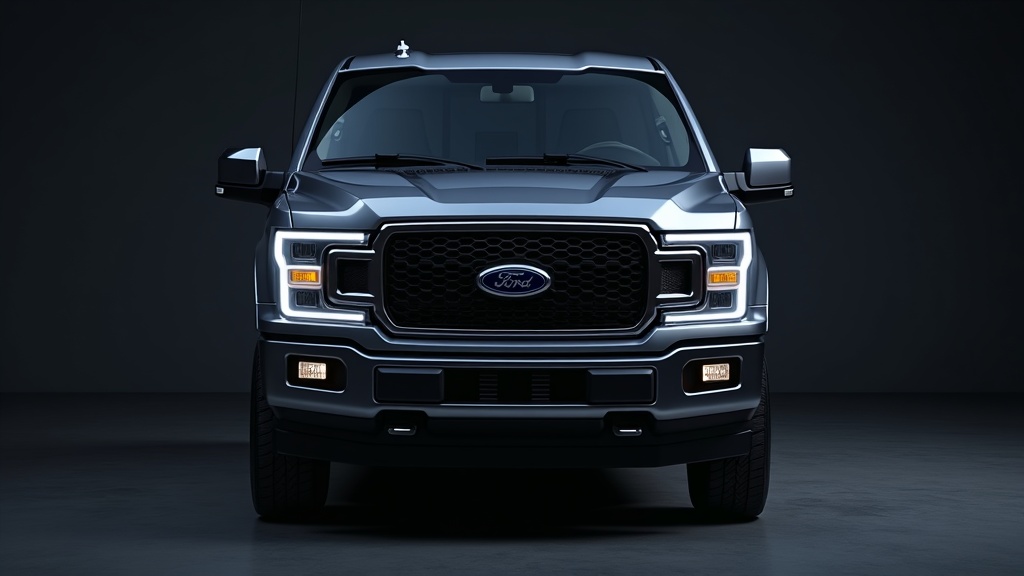
Why One Pickup Truck Has Outsold Everything Else for Decades
The Ford F-150 doesn’t just sell well. It dominates. Year after year, decade after decade, it outsells not just other trucks but entire categories of vehicles. No sedan, SUV, or crossover comes close to its consistent sales numbers.
This isn’t luck or clever marketing alone. The F-150’s enduring success comes from a combination of smart design choices, market positioning, and an ability to adapt that most vehicles never achieve.
The Foundation of Flexibility
What made the F-150 different from the start was versatility. While competitors often forced buyers to choose between capability and comfort, the F-150 offered both in varying degrees across its lineup.
Need a basic work truck? There was an F-150 for that. Want something more comfortable for daily driving? Different F-150. Looking for luxury features with truck capability? Still an F-150.
This range within a single model meant Ford captured buyers across the entire truck market rather than fighting for one segment. A construction company and a suburban family could both find exactly what they needed under the same nameplate.
Looking at Ford truck history reveals this strategy evolving across generations, with each iteration expanding the range of what the F-150 could be without losing its core identity as a capable truck.
Building on Reputation
Once the F-150 established itself as reliable and capable, that reputation became self-reinforcing. Buyers who had good experiences told others. Businesses that used F-150s for work bought more F-150s. Families that grew up riding in them bought their own.
This reputation didn’t happen by accident. Ford focused on dependability and durability in ways that mattered to truck buyers. These vehicles needed to handle heavy loads, rough conditions, and years of hard use without constant repairs.
When trucks live up to those expectations, owners become advocates. They recommend them to friends, family, and coworkers. Word-of-mouth marketing based on actual performance is more powerful than any advertising campaign.
The Right Innovations at the Right Times
The F-150’s success also comes from knowing when to innovate and when to stay conservative. Ford has made bold changes—like switching to aluminum body panels—but only after extensive testing and development.
These innovations weren’t just different for the sake of being different. They solved real problems. The aluminum switch reduced weight, improving fuel economy without sacrificing strength. That mattered to buyers facing higher fuel costs and stricter efficiency requirements.
Other changes focused on making trucks more practical for everyday use. Better interiors made them comfortable for commuting. Improved ride quality meant they weren’t punishing on regular roads. Technology additions brought them in line with cars and SUVs.
Each generation kept what worked while fixing what didn’t. This evolutionary approach prevented the radical redesigns that can alienate existing buyers while still attracting new customers.
Multiple Markets, One Vehicle
Part of the F-150’s dominance comes from successfully serving completely different buyers without fragmenting into separate models. A landscaping business and a weekend adventurer both see the F-150 as the right choice, even though their needs barely overlap.
This works because the F-150 lineup is really several different trucks sharing a common platform and name. The variety of cab sizes, bed lengths, engine options, and trim levels creates hundreds of possible configurations.
Someone who needs a basic two-door with a long bed for hauling equipment can get that. Someone else wanting a four-door with luxury features and the latest technology can get that too. Both are buying F-150s, but they’re essentially different vehicles.
This strategy captures more of the market than specialized models ever could. Instead of losing sales to competitors offering what Ford doesn’t, the F-150 lineup probably already includes it.
Adapting to Changing Buyers
Truck buyers today want different things than truck buyers wanted 30 years ago. Many modern pickup owners rarely haul heavy loads or tow trailers. They want trucks for the capability when needed, but they’re driving them daily for regular transportation.
The F-150 adapted to this shift. Higher trim levels offer luxury that rivals premium sedans. Technology packages include features buyers expect in any modern vehicle. Comfort and refinement improved dramatically across generations.
But crucially, Ford didn’t abandon the work truck market while chasing lifestyle buyers. The basic, capable work trucks still exist for businesses and contractors who need them. The lineup expanded upward without cutting off the bottom.
This both-directions approach meant Ford kept its traditional buyers while attracting new ones. Competitors who focused too heavily on either luxury or utility left market segments open. The F-150 filled them all.
The Power of Market Leadership
Being the best-seller creates advantages that reinforce the position. Dealers stock more F-150s because they sell. More inventory means more choices for buyers and faster availability. Better availability drives more sales.
The huge sales volume also supports better resale values. Buyers know F-150s are popular and easy to sell later. Strong resale value makes the initial purchase easier to justify. People buying trucks often consider long-term cost of ownership, and good resale helps.
Parts availability and service accessibility also benefit from popularity. Any mechanic can work on F-150s. Parts are easy to find. This matters to buyers who keep vehicles long-term or use them for work.
Learning From Mistakes
Not every F-150 generation or feature was successful. Ford has made decisions that didn’t work and had to reverse course. But the company’s willingness to acknowledge and fix mistakes helped maintain buyer trust.
When something didn’t perform as promised or buyers rejected a feature, Ford adjusted. This responsiveness kept the F-150 relevant and showed Ford was listening to feedback rather than stubbornly sticking with unpopular choices.
The ability to learn and adapt across decades—not just maintain one successful formula—is part of why the F-150 stayed dominant while other once-popular vehicles faded.
The Compound Effect
None of these factors alone explains the F-150’s enduring dominance. It’s the combination that creates something competitors struggle to match. Good reputation plus wide model range plus smart innovation plus market adaptation plus leadership advantages all multiply each other’s effects.
Competing with the F-150 isn’t just about building a good truck. It’s about overcoming decades of accumulated advantages in reputation, dealer network, buyer familiarity, and market position. That’s a much harder challenge than simply designing a capable vehicle.
What It Takes to Stay on Top
The F-150’s continued success isn’t guaranteed. It requires constant attention to what buyers want, willingness to innovate, and maintenance of the quality and capability that built the reputation.
Other vehicles have been best-sellers and lost that position. Staying on top for decades requires never becoming complacent. The F-150 has managed this so far by treating each generation as an opportunity to improve rather than just a refresh of what already works.
For buyers, the F-150’s dominance reflects something working right. People don’t consistently choose the same vehicle for decades unless it’s genuinely meeting their needs better than alternatives. The sales numbers aren’t just marketing success—they’re evidence that Ford figured out what truck buyers want and keeps delivering it.