
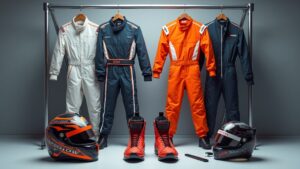
Building a Professional Racing Wardrobe
Track days mean one thing but when it comes to racing for real, the required gear changes entirely. That entry level suit and helmet is all well and good for a club based event, but as soon as you start climbing the ranks, it’s no longer good enough. The higher you get, the more proper gear you acquire that meets stringent safety measures and improves performance instead of just complying with baseline expectations. And it’s not about aesthetic appeal, either. It’s about having gear that does what it should and won’t fail you on a day when you need it most.
For drivers who compete on the regular, their gear isn’t costume protection that they have to wear. Each piece has a function, and the difference between decent kit and junk is found in safety margins and how much attention you have to pay to discomfort when you’re trying to focus on steering.
Making Sense of Suits
If you’re racing properly, you’re going to end up with several suits. A suit that’s brilliant for a 20-minute sprint is completely agonizing during a three hour endurance race. Different championships certify different options, and on top of it, there’s the weather—what’s great for a winter’s day of testing, becomes horrible in the heat of July.
Options like bespoke made racing suits let drivers get exactly what they need for their racing and their build. Proper tailoring means the suit fits without pulling or bunching when you’re reaching for controls, which gets more important as precision matters more. Standard sizes work for loads of people, but drivers who race often find that gear made to measure makes a noticeable difference.
Having multiple suits sounds excessive until you realize the benefits. Dedicating items to specific purposes extends the life of each piece and allows for more effective operation. You need time to dry out a suit that has become thoroughly soaked during a boiling race before it can work again. Otherwise you’re just ruining the integrity of the suit. There’s no reason to wear one shirt into the ground while a couple of others sit perfectly folded in a drawer.
Everything Else of Import
Even what’s underneath the suit matters nearly as much as the suit itself. Decent fire-resistant underlayers, balaclavas and socks may not be aesthetically appealing but offer protection in addition to managing sweat in favor of comfort. No one sees these undergarments but they make all the difference in how you feel within the car—especially during long races or in extreme temperature conditions.
Then it’s gloves and boots. Having several pairs is useful based on conditions and preferences. Some like thinner gloves for feel, others more protection. Boots depend partly on the pedals of the car but also if you like thin soles for feel or more support around the ankle.
The trick is making sure everything works together nicely. There’s no point in having a perfectly fitting suit if your boots are too cumbersome or your gloves inhibit wrist motion. If a driver takes racing seriously, they’ll test their full kit as one package to assess whether or not the combination allows for natural movement while keeping safety standards where they should be.
Caring For Your Kit
Racing kit requires actual care for optimum function and longevity. Most racing suits can’t go in the washer—some need specialty cleaning efforts to avoid ruining treated fire-resistance materials. Helmets require regular assessments and replacement within scheduled timeframes regardless of whether or not they’ve been impacted because certifications expire.
Storing isn’t particularly complicated but it’s critical. Kit must exist in dry areas away from sunshine (sunshine destroys fire-resistant materials). Having everything hung up between events instead of crumpled in bags helps retain shape and protective qualities.
Establishing suppliers that you trust helps look after pieces and replace them at the right time. You can’t afford anything to fail during a critical race, so keeping track of replacements comes with the territory of proper pre-race planning.
Making It Affordable
While creating a proper kit costs actual money, the best way to do it is to spread it out sensibly over time. The important items to get first are protective—in other words, suit, helmet, HANS device must be obtained first before anything else because they’re mandatory through championship regulations.
Adding everything else gradually as funds become available is the best approach. Starting with one really good suit and building from there makes more sense than starting with three mediocre options and buying another really good one later down the line. But most importantly, never compromise safety gear in order to pay for other racing expenses. This equipment is what allows everything else to work.
Higher-quality gear retains value as well. Kits that are made well last longer, are certified for more seasons, and sell better than mediocre options down the line when it’s time to upgrade. Higher price-per-unit makes more sense in the long run through higher quality longevity and better protection while you’re wearing/using it.
Professional racing requires a professional kit. Creating a proper wardrobe isn’t cheap and takes time, but with everything you need for every opportunity means you can focus exclusively on driving instead of wondering if your gear is good enough.
